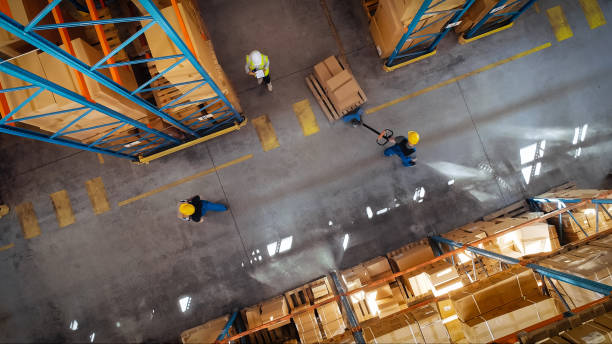
If you’ve ever walked through a warehouse solutions and wondered why one operation feels smooth and efficient while another seems chaotic, it usually comes down to one thing: how the storage is set up.
I’ve been inside enough warehouses to know that storage isn’t just about finding a place to put things. It’s about how those things move how easily your team can find them, how safely they’re handled, and how effectively space is being used.
In short, your storage system is the backbone of your supply chain.
So, let’s take a closer look at the main types of warehouse storage solutions out there, and why choosing the right one can make or break your efficiency.
Why Warehouse Storage Design Matters More Than You Think
It’s easy to underestimate how much time (and money) gets lost inside a poorly organized warehouse. You’ll see people walking long distances just to grab a single item, forklifts weaving through tight corners, and pallets sitting in awkward places because there’s simply no system for where they go.
On the flip side, when a warehouse is set up properly, everything has its place. Products move in and out quickly. Inventory counts stay accurate. And workers spend less time searching and more time doing what matters fulfilling orders.
I’ve seen companies in Simpsonville, SC, and across the U.S. completely transform their operations just by updating their storage layout. Sometimes you don’t need more space you just need a smarter way to use the one you already have.
The Main Types of Warehouse Storage Solutions
Every warehouse is different, but most fall into a handful of core storage categories. Choosing the right mix depends on your product types, inventory movement, and available space.
Let’s go through them one by one.
-
Pallet Racking Systems
This is the workhorse of most warehouses. Pallet racking is what you see in those tall, organized rows filled with product from floor to ceiling.
You can pick from several styles, like:
- Selective racks, where every pallet is directly accessible ideal for variety.
- Drive-in racks, which save space when storing large quantities of the same product.
- Push-back or flow racks, designed for high-velocity inventory.
The beauty of pallet racking is flexibility. It grows with your business, whether you’re running a small operation or managing thousands of SKUs.
-
Shelving Systems
Not every product belongs on a pallet. Smaller items, like tools, parts, or e-commerce stock, are best kept on shelving systems.
Basic shelving works well for light items, while mobile or multi-tier shelving helps maximize vertical space. If you’ve got pickers walking through aisles filling orders by hand, this type of setup keeps things simple and accessible.
It’s not fancy, but it’s practical and that’s what makes it timeless.
-
Mezzanine Storage
I’ve lost count of how many times I’ve heard a warehouse manager say, “We’re running out of space,” when they actually had plenty just not vertically.
That’s where mezzanines come in. A mezzanine is like adding a second floor to your warehouse. You can use the upper level for extra inventory, packing stations, or even offices.
It’s one of the smartest ways to grow without paying for a new facility.
-
Automated Storage and Retrieval Systems (AS/RS)
Automation isn’t the future anymore it’s here.
AS/RS systems use machines to store and retrieve goods automatically. They’re ideal for large operations where accuracy and speed are everything.
They’re not cheap, but once in place, they reduce picking errors and improve throughput like nothing else. I’ve seen warehouses cut order fulfillment times in half with the right automation setup.
-
Bin and Drawer Storage
For smaller components things like fasteners, packaging supplies, or spare parts bin and drawer storage keeps everything organized and visible.
It sounds simple, but it’s one of those systems that saves a surprising amount of time. When employees can actually see and reach what they need, work moves faster and mistakes drop dramatically.
-
Cantilever Racks
If your warehouse handles long or bulky materials pipes, lumber, steel you’ll want cantilever racks.
They don’t have vertical obstructions in the front, so you can easily load and unload long products. It’s a cleaner, safer way to handle those awkward materials that don’t fit on traditional racks.
-
Climate-Controlled Storage
Some products can’t just sit in any warehouse. If you deal with pharmaceuticals, food, or electronics, temperature and humidity control aren’t optional they’re required.
Climate-controlled storage protects your goods and ensures quality doesn’t suffer. The cost is higher, but so is the payoff if it prevents product loss or damage.
The Secret to Choosing the Right Storage Warehouse Storage Solution
Here’s the thing most warehouse owners overlook: there’s no universal answer.
The “best” storage system depends on what you’re storing, how often it moves, and how fast your business is growing.
Before suggesting anything to a client, I usually ask:
- What are your fastest-moving SKUs?
- How much seasonal fluctuation do you deal with?
- Do your items need special handling or climate control?
- How much space are you actually using not just renting?
Answer those, and the right system usually becomes obvious.
Often, a hybrid layout a mix of pallet racks, shelving, and mezzanine space works best.
Final Thoughts
Your warehouse isn’t just a place where products sit. It’s the heart of your operation the link between your business and your customers.
And the way you store those products directly impacts everything from labor costs to delivery times.
When designed right, a warehouse runs like a well-tuned engine. When designed poorly, it drains money every single day.
Contact Forysta Group, we’ve seen firsthand how the right storage strategy turns a warehouse into a competitive advantage. Whether you’re optimizing a small local space or re-engineering a national network, the same principle applies:
Efficiency starts with smart storage.